Water Harvesting System in India
Water is one of the most valuable natural resources, and India faces growing pressure on its water resources due to population growth, urbanization, industrial development, irregular rainfall, and increasing groundwater consumption. In many parts of the country, water shortages are becoming a regular concern, especially during the summer months.
A Water Harvesting System in India provides a practical and sustainable way to collect, store, filter, and reuse rainwater. Instead of allowing rainwater to flow away as runoff, these systems capture it and put it to productive use. Depending on the location and requirement, harvested water can be stored for later use or directed into the ground to improve groundwater levels.
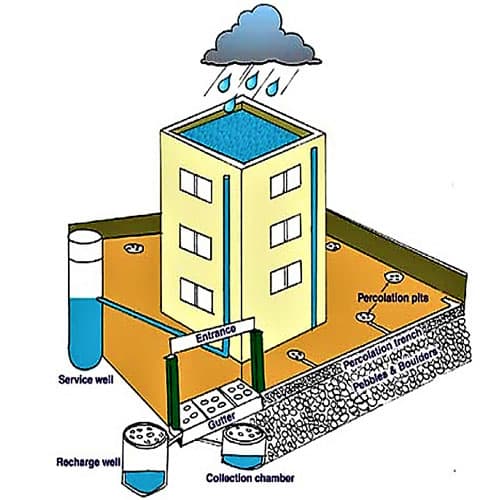
What is a Water Harvesting System?
A water harvesting system is a planned method of collecting and managing rainwater from suitable surfaces such as rooftops, terraces, paved areas, open spaces, and other catchment areas.
The collected water can be:
- Stored in underground or above-ground storage tanks
- Filtered and used for non-potable applications
- Used for gardening and landscaping
- Used for cleaning and other utility purposes
- Directed into recharge pits, trenches, wells, or borewells
- Used to support groundwater recharge
The design of a system depends on factors such as rainfall, catchment area, soil conditions, available space, water demand, and the purpose for which the harvested water will be used.
Why is Water Harvesting Important in India?
India receives a significant amount of rainfall, but rainfall is not evenly distributed throughout the country or throughout the year. A large quantity of rainwater can be lost as surface runoff during the monsoon season, while many areas experience water scarcity during dry periods.
Water harvesting helps address this imbalance by capturing rainwater when it is available and managing it for future use.
Key reasons to adopt water harvesting include:
1. Groundwater Recharge
Rainwater can be directed into suitable recharge structures to help replenish underground water sources.
2. Reduction in Water Scarcity
Harvested rainwater can provide an additional source of water for various domestic, commercial, agricultural, and industrial requirements.
3. Reduced Dependence on External Water Sources
Buildings and businesses can reduce their dependence on municipal supplies, tankers, or other external sources for suitable applications.
4. Better Rainwater Management
Proper collection systems reduce uncontrolled runoff and can help minimize waterlogging and soil erosion in suitable locations.
5. Long-Term Water Conservation
A well-designed harvesting system supports responsible water use and contributes to sustainable water management.
How Does a Water Harvesting System Work?
A typical rainwater harvesting system follows a simple process:
1. Rainwater Collection
Rainwater falls on a catchment surface, commonly a building rooftop or terrace. Gutters and pipes collect the water and direct it toward the harvesting system.
2. First-Flush Arrangement
The initial rainwater may contain dust, leaves, bird droppings, and other contaminants accumulated on the catchment surface. A first-flush arrangement can divert this initial flow before the remaining rainwater enters the filtration system.
3. Filtration
The collected water passes through an appropriate filtration system to remove suspended particles and other impurities. Filter design depends on the intended application and water quality requirements.
4. Storage or Groundwater Recharge
After filtration, the water can either be stored in a tank for later use or directed toward a suitable groundwater recharge structure.
5. Reuse
Stored water can be used for applications such as gardening, floor washing, vehicle washing, flushing, landscaping, and other suitable purposes. If water is intended for drinking or other potable applications, additional treatment and water-quality verification are required.
Applications of Water Harvesting Systems
Water harvesting can be implemented across a wide range of locations, including:
The system can be customized according to the site's water requirement, available area, rainfall pattern, soil characteristics, and groundwater conditions.
Benefits of a Water Harvesting System
A properly planned water harvesting system offers both environmental and economic benefits.
Saves Water
Rainwater that would otherwise become runoff is collected and managed for beneficial use or groundwater recharge.
Supports Groundwater Levels
Recharge-based systems can contribute to replenishing groundwater where geological and site conditions are suitable.
Reduces Water Costs
Using harvested rainwater for suitable applications can reduce the requirement for externally supplied water.
Requires Limited Maintenance
A properly designed system with accessible filters, collection components, and inspection points can be maintained efficiently through regular cleaning and periodic inspection.
Supports Sustainable Development
Water harvesting helps organizations and communities make better use of available natural water resources while reducing unnecessary water wastage.
Water Harvesting for Industries
Industrial facilities often have large rooftops, paved areas, and open spaces that can provide substantial catchment areas. This makes water harvesting particularly useful for industrial water management.
Collected rainwater can be considered for applications such as gardening, landscaping, cleaning, flushing, cooling-related requirements, and other suitable non-potable uses, depending on water quality and treatment requirements.
For large industrial projects, a site assessment is important before designing the system. Factors such as rainfall data, catchment area, runoff potential, existing drainage, soil profile, groundwater conditions, water demand, and available installation space should be evaluated.
Water Harvesting for Urban Areas
Rapid urbanization has increased the amount of concrete and paved surfaces across Indian cities. These surfaces reduce natural infiltration and can increase stormwater runoff.
Water harvesting systems can help cities and individual properties manage rainwater more effectively. Rooftop collection, recharge structures, detention systems, and modular underground solutions can be selected according to site requirements.
For urban projects, proper planning is especially important because underground utilities, limited open space, drainage networks, and existing structures can influence system design.
Factors to Consider Before Installation
Every site is different, so a water harvesting system should not be selected only on the basis of system size or available products.
Important considerations include:
- •Annual and seasonal rainfall
- •Rooftop or catchment area
- •Runoff characteristics
- •Soil and geological conditions
- •Groundwater level
- •Available installation space
- •Existing drainage infrastructure
- •Required storage capacity
- •Intended use of harvested water
- •Water quality requirements
- •Local regulations and applicable guidelines
A professional assessment can help determine the most suitable combination of collection, filtration, storage, and recharge components.
Building a Water-Secure Future with Water Harvesting
India's future water security depends not only on finding new water sources but also on managing existing resources responsibly. Rainwater is a valuable resource that can be captured and utilized instead of being lost as uncontrolled runoff.
A well-designed Water Harvesting System in India can help homes, businesses, industries, institutions, and communities conserve water, improve rainwater management, support groundwater recharge, and reduce dependence on external water sources.
With the right design, quality components, and regular maintenance, water harvesting can become a practical part of modern water management rather than simply a seasonal solution.
Choose the Right Water Harvesting Solution
The most effective water harvesting system is one designed around the actual conditions of the site. From rooftop rainwater collection and filtration to groundwater recharge and modular underground storage, different technologies can be combined to create an efficient and sustainable solution.
Whether the requirement is for a residential property, commercial building, industrial facility, institutional campus, or large infrastructure project, proper planning and technical assessment can make rainwater harvesting more effective and reliable.
Water harvesting is not just about collecting rainwater—it is about managing every drop responsibly and creating a more sustainable water future for India.