Commercial Rainwater Harvesting
Smart Water Management for Commercial Properties
Water is an essential resource for every commercial property. Offices, shopping complexes, hotels, hospitals, educational institutions, warehouses, residential societies, and other large buildings use water every day for sanitation, cleaning, landscaping, cooling, and other activities.
As water demand increases and conventional water sources become more stressed, commercial properties need practical ways to conserve and manage water. Commercial Rainwater Harvesting provides an efficient solution by collecting rainwater from rooftops and other suitable surfaces and putting it to productive use.
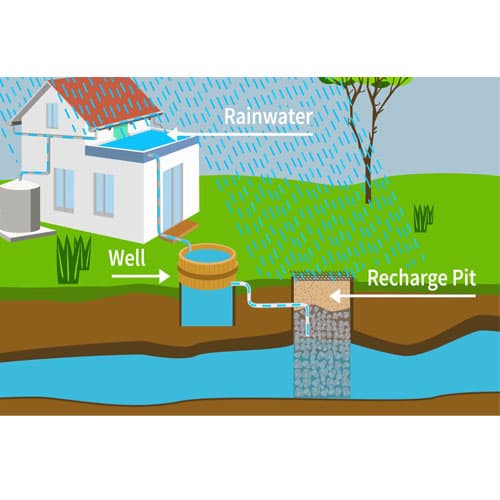
Instead of allowing rainwater to flow away through conventional drainage systems, a rainwater harvesting system can collect, filter, store, reuse, or recharge the collected water. The system can be designed according to the property's size, rainfall, water requirement, available space, and site conditions.
What is Commercial Rainwater Harvesting?
Commercial rainwater harvesting is the process of collecting rainwater from commercial buildings and other developed areas and managing it for storage, reuse, or groundwater recharge.
Large commercial properties generally have substantial roof and paved areas. These surfaces can collect considerable amounts of rainwater during the monsoon season.
A typical commercial rainwater harvesting system may include:
- Rooftop or surface catchment areas
- Gutters and drainage channels
- Rainwater collection pipes
- First-flush arrangements
- Filtration systems
- Storage tanks
- Underground storage systems
- Recharge pits, trenches, or wells
- Modular rainwater harvesting modules
- Pumps and distribution systems, where required
The components can be selected and configured according to the requirements of the property.
Why is Rainwater Harvesting Important for Commercial Properties?
Commercial properties consume water throughout the year, while rainfall is generally concentrated during specific periods. Rainwater harvesting helps bridge this gap by capturing water when it is available and making it useful for appropriate applications.
Key benefits include:
Water Conservation
Rainwater that would otherwise become surface runoff can be collected and managed effectively.
Reduced Dependence on External Water Sources
Harvested rainwater can supplement municipal water, groundwater, or tanker supplies for suitable applications.
Lower Water Expenses
Using harvested rainwater for non-potable purposes can help reduce the amount of externally sourced water required.
Groundwater Recharge
Where site and geological conditions are appropriate, collected rainwater can be directed into recharge structures.
Better Stormwater Management
Commercial buildings often have large roofs and paved areas that generate substantial runoff. A harvesting system can help manage this runoff more efficiently.
Sustainable Property Management
Rainwater harvesting demonstrates responsible water management and supports the environmental objectives of businesses and institutions.
How Does a Commercial Rainwater Harvesting System Work?
A commercial rainwater harvesting system generally works through the following stages.
1. Rainwater Collection
Rainwater is collected from rooftops, terraces, sheds, parking areas, and other suitable catchment surfaces. Gutters, channels, and pipes transport the collected water toward the filtration or storage system.
2. First-Flush Diversion
The first rainfall after a dry period may wash accumulated dust, dirt, leaves, and other materials from the catchment surface. A first-flush arrangement can divert this initial flow before the main collection process.
3. Filtration
The collected water passes through an appropriate filtration system to remove suspended particles and other physical impurities.
The type and capacity of the filter should be selected according to the catchment area, expected runoff, and intended use of the water.
4. Storage or Groundwater Recharge
After filtration, the water can be stored in tanks or underground storage structures for future use. Where conditions are suitable, the water can instead be directed into groundwater recharge structures.
5. Reuse
Stored rainwater can be used for suitable non-potable applications such as:
- Gardening and landscaping
- Toilet flushing
- Floor and area cleaning
- Vehicle washing
- Irrigation of green spaces
- Other utility requirements
For drinking water or other applications requiring higher water quality, appropriate treatment and water-quality testing are necessary.
Applications of Commercial Rainwater Harvesting
Commercial rainwater harvesting systems can be installed in a wide range of properties, including:
The system can be designed for both new construction projects and existing properties, subject to site conditions and available infrastructure.
Modular Rainwater Harvesting for Commercial Properties
Commercial properties often have limited open space because of parking areas, landscaping, buildings, roads, and other infrastructure. Underground modular rainwater harvesting systems can help address this challenge.
Modular systems use engineered underground modules to provide storage and/or infiltration capacity while making efficient use of available underground space.
They can be installed beneath suitable areas such as:
- Parking zones
- Landscaped areas
- Driveways
- Open spaces
- Service areas
The system configuration can be customized according to the required storage or recharge capacity and site conditions.
Factors to Consider Before Installation
A commercial rainwater harvesting system should be designed specifically for the property rather than using a standard arrangement for every site.
Important factors include:
A detailed site assessment can help identify the most suitable collection, filtration, storage, and recharge solution.
Maintenance of Commercial Rainwater Harvesting Systems
Regular maintenance helps keep the system efficient and reliable.
Important maintenance activities include:
Pre-monsoon inspection and cleaning are particularly useful for ensuring that the system is ready to handle rainfall efficiently.
A Sustainable Water Solution for Commercial Buildings
Commercial rainwater harvesting is a practical way to make better use of naturally available rainwater. By capturing runoff from large rooftops and other suitable surfaces, commercial properties can conserve water, improve stormwater management, and reduce their dependence on external water sources.
From simple rooftop collection systems to advanced filtration, underground storage, groundwater recharge, and modular harvesting solutions, the system can be customized according to the property's requirements.
A properly designed and maintained Commercial Rainwater Harvesting System can become an important part of a property's long-term water management strategy.
Build a Smarter Water Management System
Every commercial property has different requirements based on its location, catchment area, rainfall, water consumption, soil conditions, and available space. A site-specific assessment helps ensure that the harvesting system is designed for actual conditions.
By combining rainwater collection, filtration, storage, reuse, and groundwater recharge, commercial properties can turn seasonal rainfall into a valuable resource and take a practical step toward sustainable water management.
Harvest rainwater, conserve valuable resources, and create a more water-efficient commercial property.