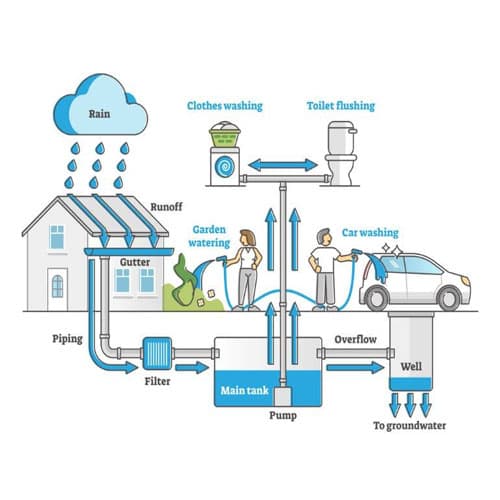
Water has become one of the most critical resources for industries across the world. Whether it is manufacturing, food processing, pharmaceuticals, textiles, automobiles, or commercial infrastructure, water is essential for daily operations. However, increasing water scarcity, declining groundwater levels, unpredictable rainfall patterns, and stricter environmental regulations are forcing industries to rethink how they manage water resources.
In recent years, modular rainwater harvesting systems have emerged as a practical and innovative solution for industrial water management. Unlike traditional rainwater harvesting structures, modular systems offer greater flexibility, scalability, efficiency, and long-term sustainability. They help industries capture, store, filter, and recharge rainwater effectively while reducing dependency on municipal and groundwater sources.
As industries move toward sustainable operations, modular rainwater harvesting is transforming the way organizations manage water resources and meet environmental goals.
The Growing Water Challenge for Industries
Industrial growth and urbanization have significantly increased water consumption. Many industries rely heavily on groundwater extraction to meet operational demands. Unfortunately, excessive groundwater withdrawal has led to declining water tables in many regions.
Some of the major water-related challenges industries face today include:
- ✓ Rising Water Costs
- ✓ Groundwater Depletion
- ✓ Water Supply Disruptions
- ✓ Regulatory compliance requirements
- ✓ Environmental sustainability pressures
- ✓ Increased competition for freshwater resources
In many industrial zones, obtaining permissions for groundwater extraction is becoming increasingly difficult. Governments and regulatory authorities are encouraging industries to adopt sustainable water management practices to reduce stress on existing water resources.
This is where rainwater harvesting becomes a valuable solution.
Understanding Modular Rainwater Harvesting
Modular rainwater harvesting is an advanced approach to collecting and managing rainwater using specially designed modular structures. These systems are typically installed underground and consist of lightweight, high-strength modules that create large storage or recharge spaces.
How It Works
Collect Rainwater
Filter Water
Store or Recharge
Reuse Sustainably
Key Features of Modular Rainwater Harvesting Systems
High Water Storage Capacity
Space Optimization
Scalability & Flexibility
Faster Installation
Long-Term Durability
Low Maintenance
Benefits for Industrial Water Management
Lower Water Costs
Reduce dependence on purchased water.
Groundwater Recharge
Improve long-term water availability.
Sustainability
Meet ESG and environmental goals.
Regulatory Compliance
Fulfill government requirements.
"Every drop of rainwater harvested today is a step toward securing tomorrow's industrial water needs."
Conclusion
Industrial water management is undergoing a significant transformation, and modular rainwater harvesting is at the center of this change. By enabling efficient rainwater collection, storage, and groundwater recharge, these systems provide industries with a practical solution to some of today's most pressing water challenges.
Their high storage efficiency, compact design, scalability, durability, and cost-effectiveness make them far superior to many conventional harvesting methods. Beyond reducing water costs and improving water security, modular systems also help industries meet sustainability goals, comply with environmental regulations, and contribute to long-term groundwater conservation.
As industries continue to seek innovative ways to manage resources responsibly, modular rainwater harvesting is proving to be more than just a water conservation tool—it is becoming a strategic investment in sustainable industrial growth. Organizations that adopt these systems today will be better prepared to navigate future water challenges while building a stronger foundation for environmental stewardship and operational resilience.